
Brussels, 2026
After three years of intensive collaboration, the European Defence Fund (EDF) project 5G COMPAD – 5G Communications for Peacekeeping and Defence – has successfully concluded, marking a major milestone in the development of next-generation, interoperable communication systems for European defence. Over its duration, the project has demonstrated how adapted 5G technologies can deliver secure, resilient and flexible communications to support missions at sea, on land, and in the air.
Launched in December 2022 and funded under the EDF 2021 call “ISR and advanced communications”, 5G COMPAD was designed to explore how state-of-the-art commercial 5G technologies can be integrated into defence platforms and operational concepts. With total eligible costs of €37.1 million, including €27 million in EU co-funding, the project brought together leading 5G vendors, defence system integrators, niche technology companies, research institutes and mobile network operators from across Europe. Together, they developed and validated a robust, multi-dimensional communications architecture capable of supporting European armed forces in both national and coalition operations.
“5G COMPAD has shown in real-world demonstrations that tailored, secure 5G networks can significantly improve how European forces communicate, share data and make decisions in demanding operational environments. The results provide a solid foundation for the next generation of interoperable communications capabilities that will support coalition operations and strengthen Europe’s strategic autonomy,” said the project lead and representative of Saab, the project’s coordinating company.
Building on extensive feasibility studies and requirements work with ministries of defence from participating countries, 5G COMPAD has delivered and validated:
Over its three-year duration, 5G COMPAD achieved significant technical and operational outcomes, including:
The Global demonstrations brought together operators, industry and defence stakeholders in realistic environments:
Collectively, these activities demonstrated that 5G-based communications can improve responsiveness, resilience and data-sharing across domains, while integrating with existing defence systems and procedures.
By enabling the recurrent integration of 5G technologies into existing platforms and systems, 5G COMPAD lays the groundwork for a robust, high-speed and future-proof communication ecosystem. This approach allows for the rapid introduction of new capabilities, ensuring sustained information superiority across the full spectrum of operations – from peacetime and grey-zone activities to high-intensity conflicts.
The project’s architecture and demonstrators show how defence users can continuously evolve their communications capabilities in step with advances in commercial 5G, while preserving the security, resilience and control required for military use.
The 5G COMPAD project has achieved its core objective: to demonstrate that adapted, secure 5G technologies can underpin a robust, multi-dimensional defence communications architecture that complements and enhances current systems.
Key outcomes include:
Building directly on these achievements, a follow-on project – 5G COMPAD 2.0, selected under the EDF 2024 call “Development actions on information superiority” – will further mature these concepts into deployable, interoperable capabilities and contribute to a defence multi-dimensional communication framework for European armed forces.
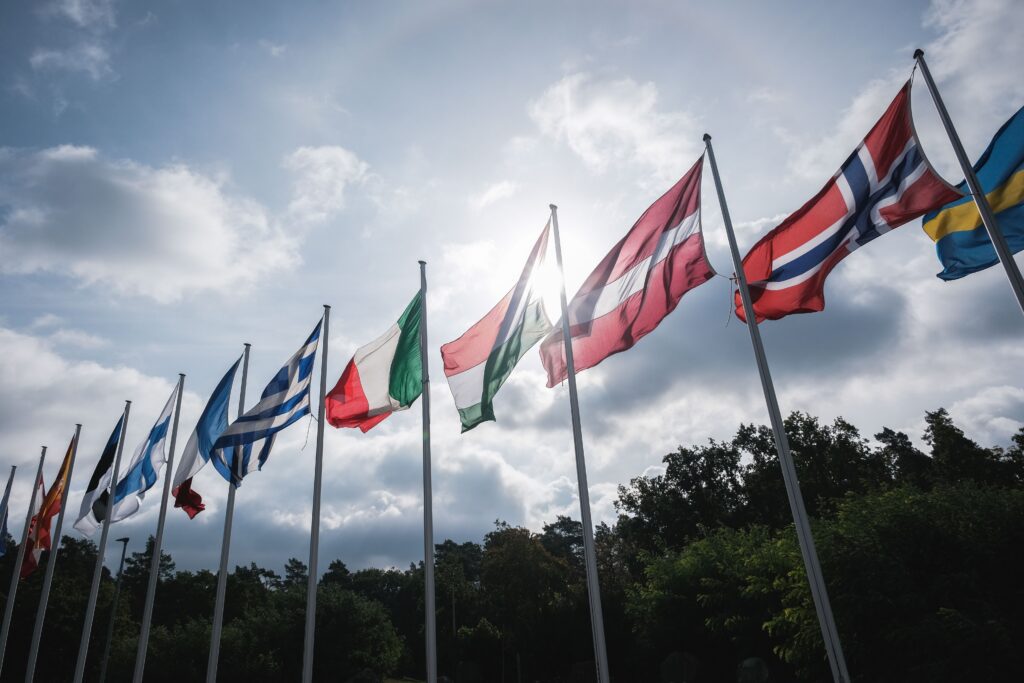
The 5G COMPAD consortium brought together 19 partners from 11 EU Member States (Austria, Estonia, Finland, France, Germany, Greece, Hungary, Italy, Latvia, Spain and Sweden) and Norway, spanning large industry, SMEs, research institutes and mobile network operators.
Consortium members and countries of establishment:
Project details
Project: 101103519 — 5G COMPAD — EDF-2021-C4ISR-D-2
Total eligible costs: €37,096,363.98
Maximum EU contribution (EDF): €26,998,532.29
Press contact
5G COMPAD Communication team
media @ 5gcompad.eu
Views and opinions expressed are however those of the author(s) only and do not necessarily reflect those of the European Union or the European Commission. Neither the European Union nor the granting authority can be held responsible for them.